injection
-
Numbing Cream
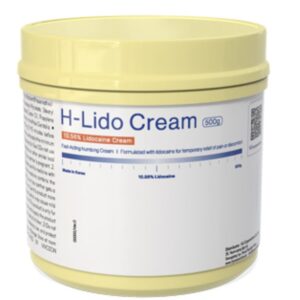
H-LIDO 10% Lidocaine Cream for Aesthetic Treatments
Original price was: £49.99.£40.00Current price is: £40.00. Add to cartProduct Overview
-
Type: Topical anesthetic (numbing cream)
-
Main ingredient: Lidocaine 10.56%
-
Purpose: Temporarily numbs the skin to reduce pain during cosmetic or medical procedures.
Key Features
-
High strength: 10.56% lidocaine for strong numbing effect.
-
Fast acting: Usually begins numbing within 5–15 minutes.
-
Long lasting: Numbing effect can last 60–90 minutes.
-
Deep penetration: Can numb skin up to about 8 mm depth depending on application.
-
Professional use: Often used in clinics and aesthetic salons.
Common Uses
H-Lido is used to reduce pain during:
-
Tattoo procedures
-
Permanent makeup (PMU) / Microblading
-
Laser treatments
-
Microneedling
-
Mesotherapy
-
Chemical peels
-
Hair removal / waxing
-
Minor dermatology procedures
Typical Application Method
-
Clean the treatment area.
-
Apply a thick layer of cream.
-
Cover with plastic wrap (occlusion) to enhance absorption.
-
Wait 20–30 minutes before the procedure.
-
Remove cream and disinfect skin.
Safety Notes
-
For external use only.
-
Do not apply to broken skin or large areas without medical guidance.
-
Possible side effects include irritation, redness, dizziness, or allergic reactions.
Common Uses in Aesthetic Medicine
H-Lido is commonly used before:
Tattoo & PMU
-
Tattoo sessions
-
Permanent makeup
-
Microblading
Dermatology
-
Laser therapy
-
Mole removal
-
Wart removal
-
Freckle removal
Aesthetic treatments
-
Microneedling
-
Mesotherapy
-
Chemical peels
-
Skin rejuvenation
-
Biorevitalization
-
Hair removal
These treatments involve needles, lasers, or abrasions where numbing helps patient comfort.
Professional Application Method
Typical clinical protocol:
-
Clean and disinfect treatment area.
-
Apply thick layer (0.25–0.66 g) of cream.
-
Cover with plastic wrap (occlusion).
-
Wait 20–30 minutes.
-
Remove cream and disinfect skin before procedure.
Occlusion improves penetration and effectiveness.
Maximum Dosage & Safety
Recommended safety guidelines:
-
Do not exceed 2 g per day of high-strength lidocaine cream.
-
Avoid applying on:
-
broken skin
-
infected areas
-
large body areas
-
Contraindications
-
Allergy to lidocaine
-
Hypersensitivity to amide anesthetics
-
Severe skin inflammation
Possible Side Effects
Most users experience no serious problems, but possible reactions include:
-
Redness
-
Skin irritation
-
Mild burning
-
Temporary swelling
-
Allergic reaction (rare)
Stop using if irritation persists.
Storage & Shelf Life
-
Store at 1–30°C
-
Keep container sealed
-
Protect from direct sunlight
-
Shelf life typically 36 months from manufacture date.
Why Clinics Use High-Strength Lidocaine
Benefits of 10.56% creams:
-
Stronger than standard 4–5% lidocaine creams
-
Faster and deeper numbing
-
Long-lasting effect
-
More comfortable aesthetic procedures for patients
Active Ingredient & Mechanism
Lidocaine (10.56%)
-
Local anesthetic belonging to the amide anesthetic group
-
Blocks sodium channels in nerve endings
-
Stops pain signals traveling to the brain
This temporarily numbs the skin in the treatment area.
Effect Depth
-
Penetrates skin up to ~8 mm depth depending on thickness of application.
Full Ingredient Composition
Typical formula for H-Lido / SM-Lido 10.56% creams:
Active ingredient
-
Lidocaine – 105.6 mg (10.56%)
Other ingredients
-
Methylparaben (preservative)
-
Isopropyl Myristate
-
Stearyl Alcohol
-
Propylene Glycol
-
Carbomer 940
-
Trolamine
-
Polysorbate 60
-
Purified Water
These ingredients stabilize the cream and improve skin absorption and texture.
Performance Characteristics
Onset Time
-
Starts working in 5–15 minutes
-
Maximum numbing in 20–30 minutes
Duration
-
Numbing effect lasts 60–90 minutes after application.
Penetration
-
Can numb deeper dermal layers for procedures such as tattooing or microneedling.
-
-
Dermal Penetration Depth
High-strength lidocaine creams can penetrate approximately:
Skin Layer Depth Epidermis ~0.1 mm Dermis 1–2 mm Maximum anesthetic reach up to 6–8 mm Penetration improves when:
-
thicker layer applied
-
occlusion used
-
longer waiting time allowed
Typical Clinical Indications
H-Lido is widely used in medical aesthetic procedures.
Tattoo Industry
-
Tattooing
-
Tattoo touch-ups
-
Tattoo removal (laser)
Permanent Makeup
-
Microblading
-
Eyebrow tattoo
-
Lip blush
-
Eyeliner tattoo
Dermatology
-
Laser resurfacing
-
Wart removal
-
Mole removal
-
Skin biopsies
Cosmetic Procedures
-
Microneedling
-
Mesotherapy
-
PRP injections
-
Dermal filler injections
-
Botox injections
-
Chemical peels
Recommended Professional Protocol
Step 1 – Skin Preparation
-
Clean area with antiseptic
-
Dry the skin completely
Step 2 – Cream Application
Apply 1–2 mm thick layer.
Step 3 – Occlusion
Cover with:
-
plastic wrap
-
occlusive film
This:
-
prevents evaporation
-
increases penetration
-
improves numbing strength
Step 4 – Waiting Period
Allow 20–30 minutes.
Step 5 – Removal
-
Remove wrap
-
wipe cream
-
disinfect skin again
Procedure can then begin.
Dosage Guidelines
Recommended safe limits vary by manufacturer.
Typical dermatology guideline:
Application Area Maximum Amount Small procedure area 1–2 g Medium area 2–5 g Large area clinical supervision required Avoid applying large quantities on:
-
broken skin
-
inflamed skin
-
large body surfaces.
Duration of Numbing
The anesthetic effect depends on:
-
lidocaine concentration
-
exposure time
-
occlusion use
Typical duration:
Strength Duration 5% Lidocaine 30–60 minutes 10.56% Lidocaine 60–90 minutes Some patients may experience numbness for up to 2 hours.
Safety Profile
Lidocaine topical anesthetics are generally safe when used properly.
Common Mild Effects
-
redness
-
mild swelling
-
itching
-
tingling sensation
Rare Side Effects
-
dizziness
-
allergic reaction
-
rash
-
methemoglobinemia (extremely rare)
High-Risk Groups
Extra caution for:
-
children
-
elderly
-
patients with liver disease
-
lidocaine allergy
Contraindications
Do NOT use if patient has:
-
hypersensitivity to lidocaine
-
allergy to amide anesthetics
-
severe skin infection
-
open wounds
-
severe dermatitis
Storage Conditions
Proper storage ensures stability:
Temperature: 1°C – 30°C
Avoid:
-
heat
-
freezing
-
direct sunlight
Shelf life typically 3 years (36 months).
Differences Between Common Numbing Creams
Brand Lidocaine Strength Typical Use EMLA 2.5% lidocaine + prilocaine medical procedures TKTX 40% mix anesthetics tattoo numbing H-Lido 10.56% lidocaine aesthetic clinics Beyond Numb strong lidocaine formula tattoo & PMU -
-
-
-
-